
Plastering Cost: Request Plasterer Quotes
Wondering what plastering will cost for your walls or ceilings? Plastering cost depends mainly on the finish you want, the condition of the surface and the size of the area. This guide explains how plasterers charge, which choices affect the price and what to check before you hire, so you end up with smooth walls and ceilings that are ready for decorating.
How much does a plasterer cost?
Most plasterers charge per square metre, though some work on an hourly rate or a fixed price for small jobs. Machine-sprayed finishes are usually the cheapest per square metre, while hand plastering costs more because it takes more time and skill. Rates also vary by region and by how busy plasterers are in your area.
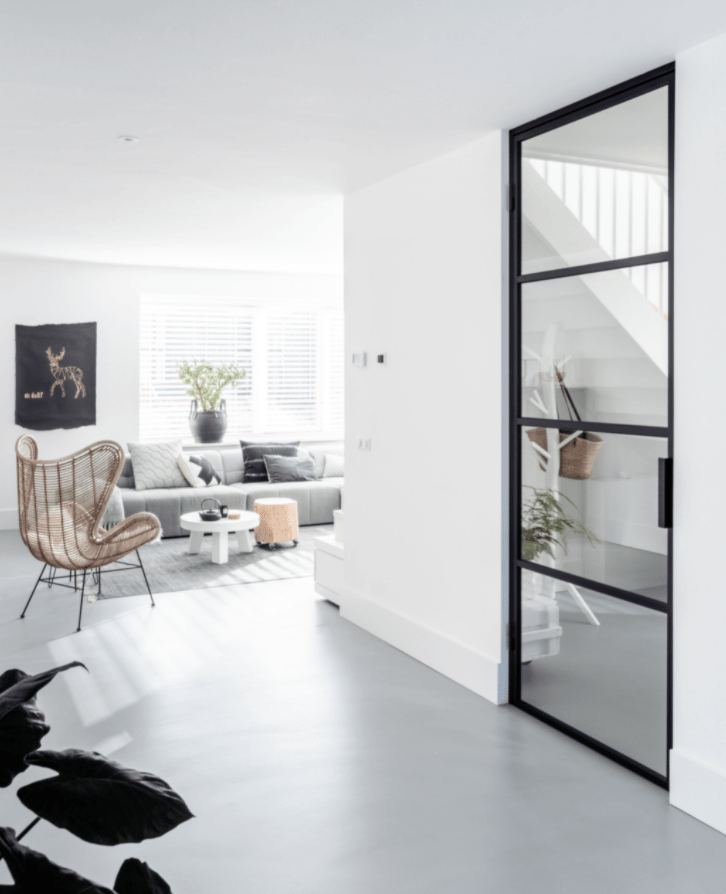
Request Plasterer Quotes:
- Fill in a short request and receive up to 4 free quotes
- Compare plastering companies in your area
- Done in 2 minutes
Knowing what drives the price helps you compare quotes properly. The main factors are:
The type of plastering company
The type of plastering or finish
Where the plastering is done (walls, ceilings, indoors or outdoors)
Read on for more on each of these.
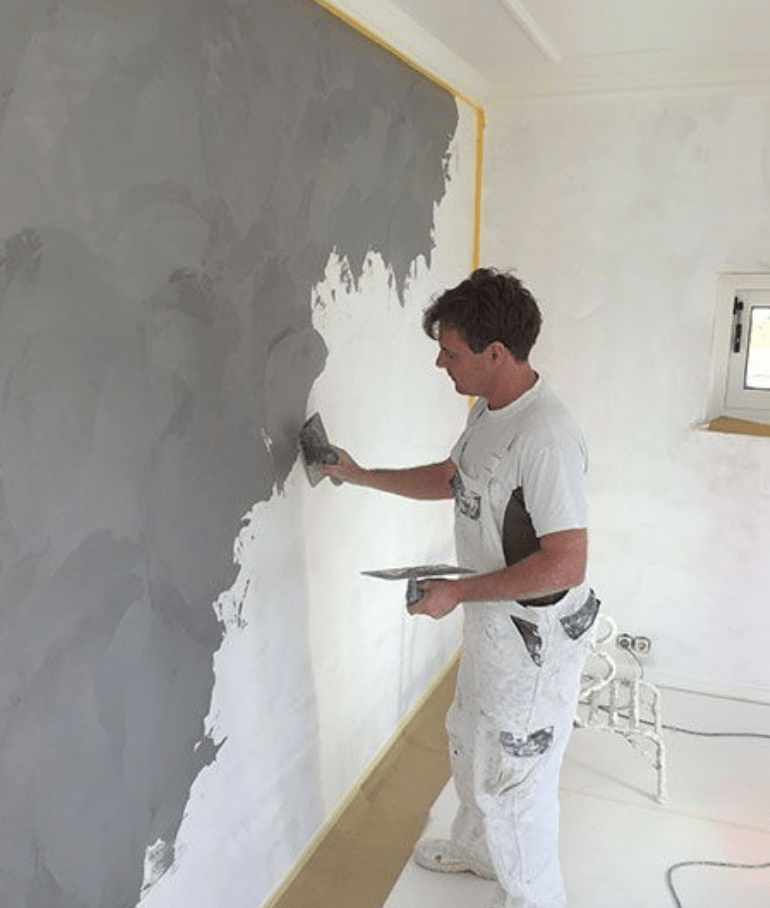
Examples of plastering finishes
The most affordable option is a sprayed finish. It's applied by machine, which makes the work much faster, but the wall must already be smooth.
A popular middle option
Many people choose a hand-applied decorative render with a light texture. It's more resistant to knocks than a thin spray finish and sits in the mid price range.
The most luxurious option
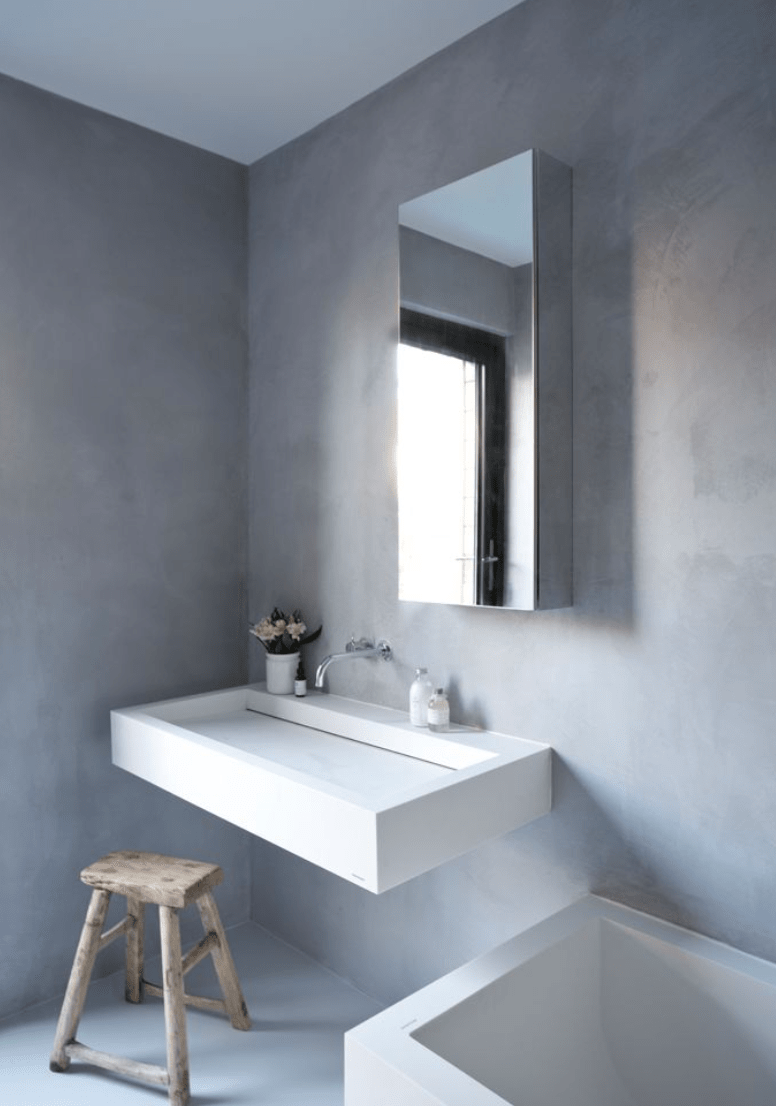
Tadelakt is a traditional, water-resistant lime plaster that's polished by hand with stones. It's a specialist craft and one of the most expensive finishes, so use a plasterer with proven experience.
Six choices that decide the price
When you hire a plasterer, for example as part of a renovation, six choices affect the final price. Here's what to think about for each.
Choice 1: What do you need the plasterer for?
Start with the result you want:
I want my wall or ceiling levelled for paint, wallpaper or decorative render. Or would a tiler be a better fit?
For a paint-ready finish, the plasterer makes the surface completely smooth by hand. A wallpaper-ready finish is a little cheaper because it doesn't need to be quite as smooth. It's fine for wallpaper or decorative render, but paint will show the imperfections.
My wall or ceiling is already smooth and I want it finished: sprayed finish.
A sprayed finish is applied by machine, which makes it the cheapest option. It's usually white, but other colours are possible for a small surcharge. Because the colour runs all the way through, small knocks are less visible and you may not need to paint.
I want a textured finish on a smooth wall or ceiling: decorative render.
Decorative renders come in fine to coarse grains and different patterns. The popular types cost roughly the same, so the choice is mainly about the look you like. Ask your plasterer for samples.
Choice 2: Spray finish or hand plastering?
If you need levelling or decorative render, the plasterer will work by hand. If your wall is already smooth, a spray finish may be possible. This overview helps you see which applies:
| Spray finish (spraying machine) | Plastering (by hand) |
|---|---|
| A spray finish is a top coat, so it can only be applied to smooth walls. An uneven wall needs plastering first. | Plastering is possible on all types of walls, including walls with cracks. Some types of plaster serve as a base coat and others as a finish. |
| A spray finish is suitable for indoor use. | Plastering is suitable for both indoor and outdoor use. |
| A spray finish is a thin layer of a few millimetres; the base layer has to provide the protection. | Plaster is a sturdy layer that can range from millimetres to centimetres thick, depending on the condition of the wall. |
| A spray finish can be applied in various colours and grain textures. | Plaster can be applied in various colours, (grain) textures and patterns. |
Choice 3: Which type of plaster?
Once you know whether you need a spray finish or hand plastering, you can choose the material. Roughly from cheapest to most expensive (per square metre, including labour):
- Spray finish: sprayed skim finish, the most affordable option.
- Hand plastering for levelling: wallpaper-ready or paint-ready plastering, base plaster and scratch coat.
- Hand-applied finishes: decorative render and scraped render.
- Specialist finishes: clay plaster, polished concrete-look finishes such as microcement, and tadelakt, which cost considerably more.
Request Plasterer Quotes:
- Fill in a short request and receive up to 4 free quotes
- Compare plastering companies in your area
- Done in 2 minutes
Choice 4: Walls or ceilings?
Ceilings cost more per square metre than walls because the plasterer works overhead, which is slower and harder. Hard-to-reach areas such as stairwells often carry a surcharge too.
Not sure how big the area is? The table below gives rough example sizes for common rooms. Measure your own rooms for an accurate figure, then multiply by the square-metre rate in your quote to estimate the total.
| Room | Typical surface area |
|---|---|
| Living room walls | 52 m2 |
| Kitchen walls | 24 m2 |
| Bedroom walls | 40 m2 |
| Hallway walls | 26 m2 |
| Living room ceiling | 20 m2 |
| Kitchen ceiling | 9 m2 |
| Bedroom ceiling | 16 m2 |
| Hallway ceiling | 10 m2 |
Choice 5: Indoors or outdoors?
This guide is mainly about indoor plastering. Exterior render costs more per square metre because it has to stand up to the weather, and the job often needs scaffolding. Scraped render and textured renders are common outdoor choices.
Check whether priming, repairs and levelling coats are included in the square-metre price. They're often needed but priced separately.
Choice 6: What kind of plasterer?
A few common questions when choosing who to hire:
Self-employed plasterer or a larger company?
Both set their own rates. A larger company may have higher overheads, but also more people for aftercare and sometimes better prices on materials. Compare quotes, look at experience and reviews, and choose who you trust most.
What about cash-in-hand work?
Hiring someone off the books might look cheaper, but you have no paper trail, no guarantee and possibly no insurance. If someone is injured on your property, you could even face liability. Go with a properly registered, insured plasterer.
How to find a good price:
Compare several quotes. Side by side, you can see exactly what is and isn't included. The cheapest quote isn't always the cheapest once tax, travel costs, materials and rubble removal are added.
Price per square metre or per hour?
Most quotes are per square metre. For small areas, plasterers often charge an hourly rate or a fixed price, because the time is easy to estimate.
Good to know when hiring a plasterer
A few final points:
Tax: in some countries, reduced VAT or sales tax rates apply to certain renovation work. Check the rules where you live and ask whether the quote includes tax.
Minimum charge: for small jobs and repairs, many plasterers charge a minimum fee. Ask about this up front.
Extra costs: travel, rubble removal, protecting floors and furniture, and repairs to damaged walls can all add to the bill. Check what each quote includes.
Preparation and drying: fix any damp before plastering, and let fresh plaster dry fully before painting. Your plasterer can tell you how long that takes.
Quality: look at reviews and photos of recent work, check insurance, and see whether the plasterer belongs to a recognised trade association. Ask what guarantee they give on the work.

Request Plasterer Quotes:
- Fill in a short request and receive up to 4 free quotes
- Compare plastering companies in your area
- Done in 2 minutes
Get up to 4 free quotes from vetted local pros
Post your job for free. No obligation to hire.