
Thinking about a heat pump? A heat pump heats your home and hot water using energy from the air, ground or water, and many models can cool your home in summer too. It's a lower-carbon alternative to a gas boiler. Below you'll find independent information on the types of heat pump, what to check before you buy, and how to get quotes.
Benefits of a heat pump
- Less or no gas used for heating.
- Lower CO2 emissions.
- No flue or chimney needed for a fully electric system.
- Usually less maintenance than a gas boiler.
- Grants or incentives may be available in your area.
- Can make your home more attractive to buyers.
Electric Heat Pump
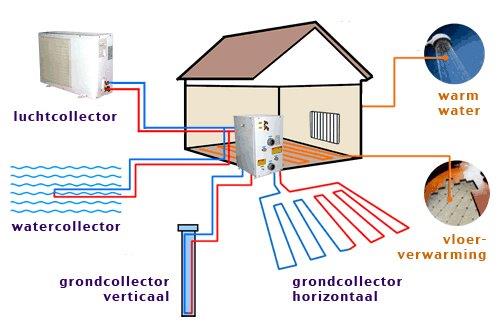
An electric heat pump takes most of its heat from the outside air, the ground or water, and uses a smaller amount of electricity to raise it to a useful temperature. In a well-insulated home that can mean lower running costs and lower emissions. Read the full guide to electric heat pumps.
Hybrid Heat Pump
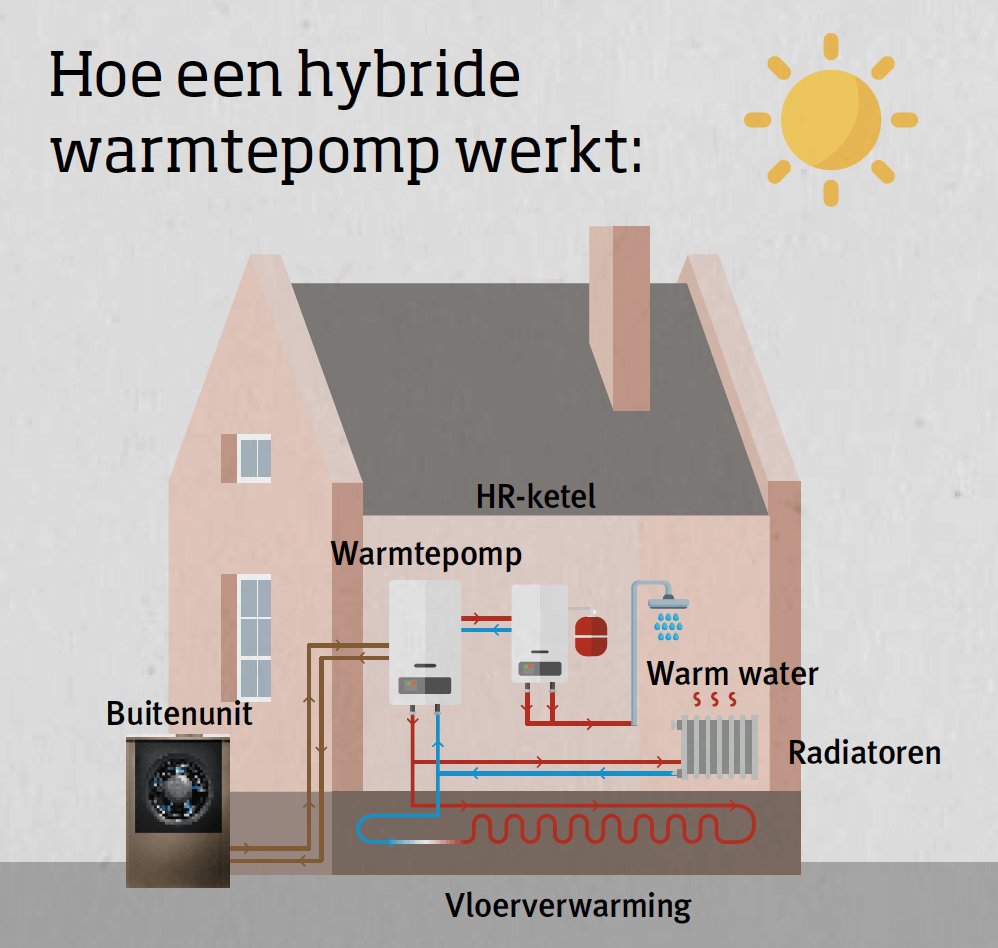
A hybrid heat pump works alongside your existing gas boiler. The outdoor unit takes heat from the outside air, and a small indoor unit next to the boiler passes it into your central heating. The heat pump does most of the work, and the boiler steps in on the coldest days or for hot water.
It's often a sensible first step for homes that aren't yet insulated well enough for a fully electric system. Read everything about the hybrid heat pump.
Buying and installation
Which heat pump suits you depends on your home: insulation, radiators or underfloor heating, space for an outdoor unit and your hot water needs. Get advice tailored to your home from an installer or an independent energy advisor before you buy.
A heat pump only works efficiently if it's sized and set up correctly, so choose an experienced, certified installer. Ask them to do a heat loss calculation for each room, check whether your radiators are big enough for lower flow temperatures, and explain where the outdoor unit will go and how loud it is. An air-source system is usually fitted in a day or two. A ground-source system takes longer because a borehole or ground loop is needed, and in many countries this needs a specialist with specific certification and sometimes a permit.
Good for your wallet and the environment
A heat pump replaces some or all of the gas you burn for heating. That cuts CO2 emissions, because burning gas releases carbon. Whether it also saves you money depends on your local gas and electricity prices, how well your home is insulated and how the system is set up. In a well-insulated home with a correctly sized system, running costs are often lower than with a gas boiler. Ask your installer for an estimate based on your own home.
Request Free, No-Obligation Quotes
Post your job on Fixmycrib and you'll receive up to 4 free quotes from heat pump installers in your area. Compare them on more than price: the type and size of heat pump, the warranty, what's included in the installation and whether the installer is certified. Prices for the same job can differ a lot, so comparing is worth it. There's no obligation to accept any quote.
Frequently Asked Questions
How much does a heat pump cost?
It depends on the type (air-source, ground-source or hybrid), the capacity you need and the installation work. Hybrid systems are usually the cheapest, and ground-source systems cost the most because of the drilling. Costs vary by region and job, so compare several quotes.
Is my home suitable for a heat pump?
A fully electric heat pump works best in a well-insulated home with low-temperature heating such as underfloor heating or larger radiators. If your home is less well insulated, a hybrid heat pump or insulating first is often the better route.
How long does installation take?
An air-source or hybrid heat pump is usually fitted within a day or two. A ground-source system takes longer because a borehole has to be drilled.
Can a heat pump cool my home?
Many heat pumps can cool in summer. Ask the installer whether the model you're considering can.
Does a heat pump need maintenance?
Yes, but not much. Keep the outdoor unit clear of leaves and snow, and have it serviced by a qualified engineer as the manufacturer recommends, usually once a year.
Get up to 4 free quotes from vetted local pros
Post your job for free. No obligation to hire.