
Asbestos Removal: Costs, Risks and Finding a Specialist
Wondering what asbestos removal costs and how it's done safely? Asbestos is a serious health hazard once fibres are released, which is why many countries restrict or ban it, especially on roofs exposed to the weather. Asbestos indoors isn't always banned, but it needs careful handling. This page covers what affects the asbestos removal cost, the health risks, surveys and how to choose a licensed specialist. Never break, drill or sand suspect material yourself.
Asbestos removal costs
Removing asbestos is a hazardous job. A specialist finds out where the asbestos is, removes it and arranges safe disposal. So if your home is older, have it checked before you remodel your home. The cost depends mainly on:
- Type of material: bonded asbestos (such as corrugated cement sheets or roof slates) is generally cheaper to remove than loose, friable asbestos.
- Surface area and quantity: the more square metres or rooms involved, the higher the price, although the cost per square metre usually falls on larger jobs.
- Location and accessibility: a shed roof that is easy to reach costs less than asbestos inside the home that requires sealing off several rooms.
- Survey: whether an asbestos survey is required before the work can start.
- Packaging, transport and disposal: asbestos must be wrapped in special packaging and taken to a licensed disposal site, which is usually charged by weight.
- Travel costs and local rates: labour rates and call-out charges vary by region and country.
Request asbestos removal quotes
- Fill in a short request, it only takes 2 minutes
- Get quotes from local specialists by email
- Compare up to 4 quotes and check each company's licence
Why is it wise to have asbestos removed?
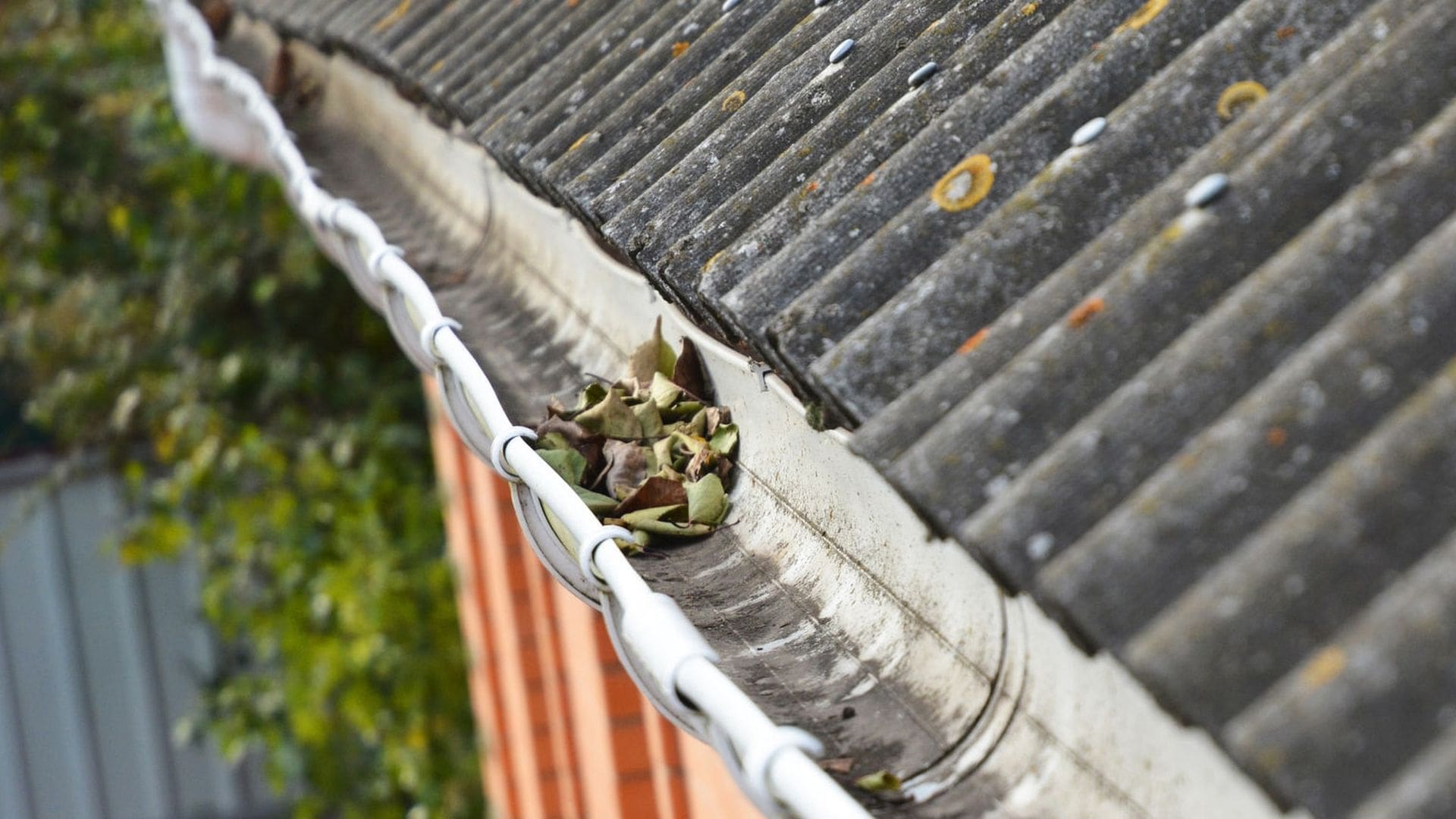
Asbestos that's intact and left alone is low risk. The problem starts when it weathers, breaks or gets disturbed during building work. Old corrugated sheets and roof slates slowly break down outdoors, which raises the chance of fibres coming loose. That's why many countries restrict or ban asbestos roofing, and why good roof maintenance includes checking older roofs for it.
Is asbestos bad for my health?
Asbestos can be found in ceilings, roofs, floors and windowsills, among other places. If it's undamaged and you leave it alone, the risk is low. But breaking, sawing, drilling or sanding it releases fibres. They're far thinner than a human hair, invisible to the eye and easy to breathe deep into your lungs.
Breathing in asbestos fibres raises the risk of serious lung diseases, including asbestosis, lung cancer and mesothelioma (a cancer of the lining of the lungs). These usually show up decades after exposure, and the risk grows with the amount of exposure. If you think you've disturbed asbestos, stop work, keep others away and get advice from a specialist.
Recognising asbestos
Asbestos is difficult to recognise, which is why specialists carry out asbestos surveys. After a survey you will know exactly where asbestos is present in your home. Most countries have banned the production and use of asbestos products, many of them from the 1980s or 1990s onwards. If your home was built after the ban came into force in your country, it is unlikely that asbestos was used in it; homes built before then may well contain it.
Where is asbestos found?
Asbestos can be divided into 2 groups: bonded asbestos and non-bonded (friable) asbestos. Bonded asbestos is found in cement, adhesive or plastic, and the chance of fibres coming loose from it is small. Check the table to see in which products bonded asbestos is commonly found.
| Bonded asbestos | Often used in: |
|---|---|
| Corrugated sheets | Roofs of sheds and barns |
| Roof slates | Roofs |
| Asbestos cement sheets | Facades and chimneys |
| Vinyl tiles | Kitchens and toilets |
| Flues | Heating systems and ventilation ducts |
| Drainage pipes | All types of drainage in homes |
| Imitation marble | Windowsills |
Having asbestos removed
Do you want to demolish or renovate a roof or other part of your home that contains asbestos? In many countries you are then required to have an asbestos survey carried out first, particularly for larger surfaces. Certified companies carry out this survey for you, and based on the inspection you receive an asbestos survey report. Local authorities often want to see this report before granting permission for demolition or renovation work. It is also useful to know where asbestos has been used in your home, so you know exactly where you must never drill, nail or sand. Survey reports are usually only valid for a limited period; after that they are no longer up to date and a new survey is needed.
Types of asbestos survey
The names and requirements differ from country to country, but asbestos surveys generally fall into a few types. The table below explains what each involves.
| Type of survey | Description |
|---|---|
| Visual inspection | A quick visual assessment of materials suspected of containing asbestos that are directly visible. Note: the results are usually not sufficient for a demolition permit. |
| Standard (management) survey | An inspection for asbestos-containing materials that are directly accessible, with samples taken for laboratory analysis. |
| Survey with risk assessment | The same as a standard survey, plus a risk analysis. If asbestos is in a place where it poses no immediate health risk, it does not always have to be removed straight away; the specialist then draws up a management plan for the asbestos that stays in place. |
| Intrusive (demolition/refurbishment) survey | Required when hidden asbestos is suspected or before major works. Parts of the building may need to be opened up or dismantled during this survey. |
The cost of a survey depends on the type of survey, the size and age of the property and the number of samples that need to be analysed.
When am I required to remove asbestos?
In some cases you are legally required to have asbestos removed, for example when asbestos roofing or other large asbestos-containing surfaces are exposed to the open air, or before demolition or renovation work. The rules differ per country, so check with your local authority what applies to you. Removing asbestos is dangerous, so hire a licensed specialist.
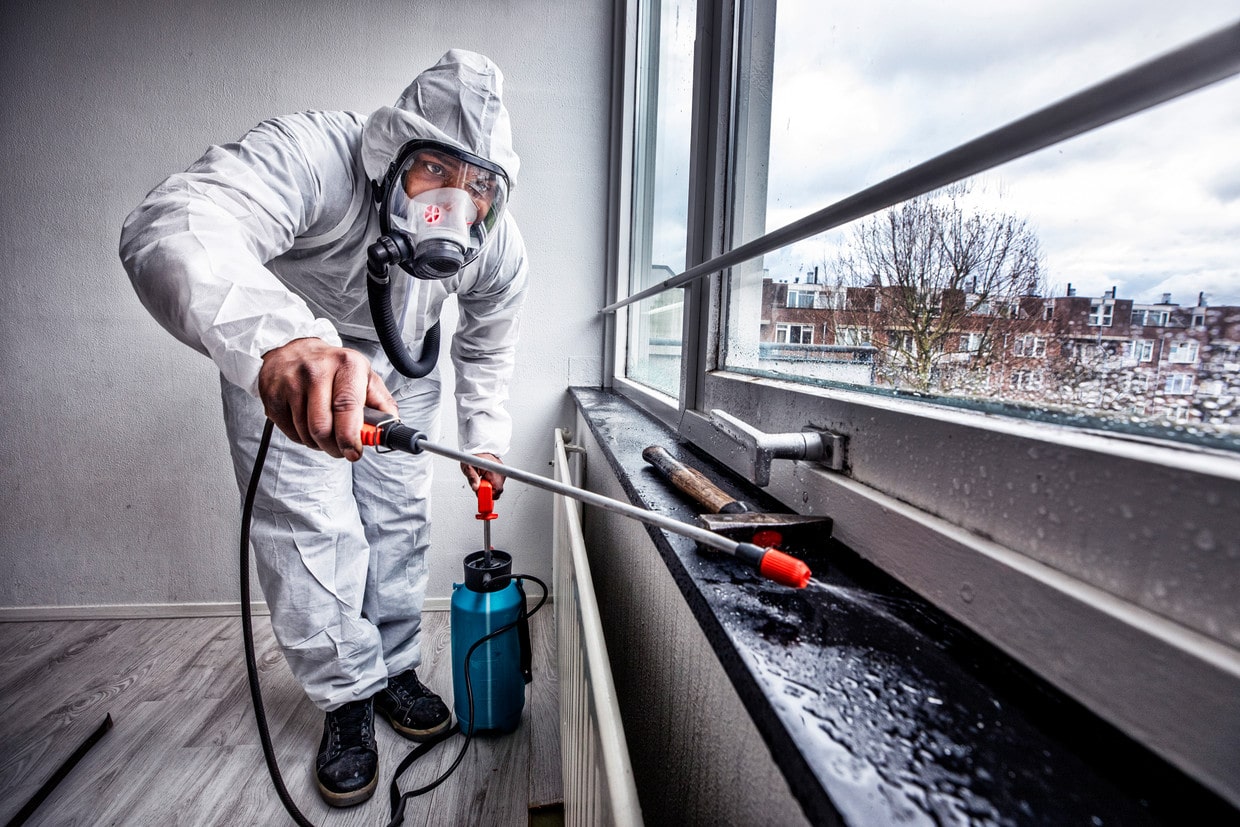
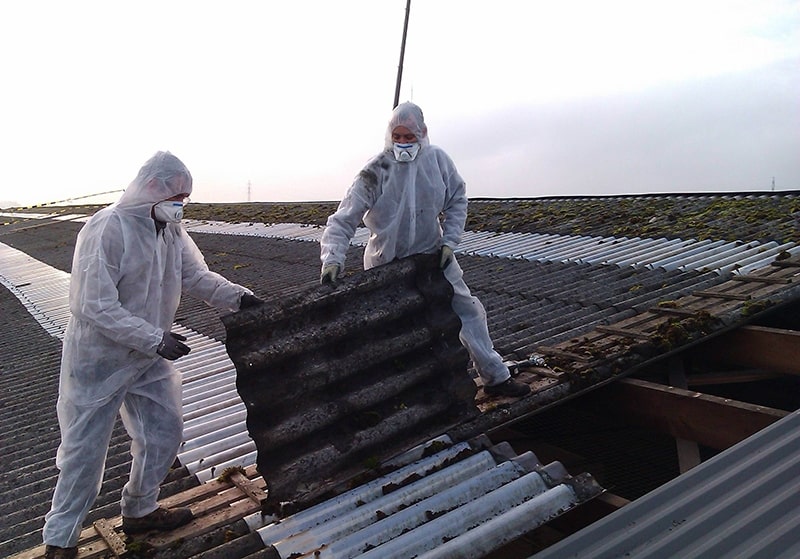
Here's what a proper job looks like. First, the area is sealed off so that asbestos fibres cannot spread. Before starting, the specialist puts on boots, gloves and protective overalls, as well as a respirator mask and safety goggles. Windows and doors are closed so that fibres cannot get inside. The asbestos is first sprayed with water so the fibres do not blow away. When removing it, the specialist sprays the screws and nails with a binding spray so the fibres stay stuck to them. Once removed, the asbestos is wrapped in special packaging. It must then be transported as safely as possible to a licensed waste processing site, where it is disposed of.
Request asbestos removal quotes
- Fill in a short request, it only takes 2 minutes
- Get quotes from local specialists by email
- Compare up to 4 quotes and check each company's licence
Replacing an asbestos roof
In many countries, asbestos roofs exposed to the open air must be removed or are being phased out. Once the asbestos has been removed, the roof gets a new covering. The cost of replacing an asbestos roof varies considerably and depends on:
- Roof size: a small shed roof costs far less than the roof of a house or barn.
- Type of asbestos roofing: corrugated sheets are usually quicker to remove than roof slates.
- Survey and notification: whether a survey is needed and whether the removal has to be reported to your local authority.
- New roof covering: this largely determines the total cost. Corrugated sheets and bitumen are cheaper than roof tiles or slates.
- Grants: check whether your national or local government offers grants for removing asbestos roofs.
Grants for asbestos removal
Some governments offer grants or subsidies to encourage homeowners to have asbestos roofs removed. Check whether your national or local government offers grants. Schemes like these typically come with conditions, for example:
- Only the person who paid the invoice for the removal can apply.
- The removal must have been carried out by a certified or licensed asbestos removal company.
- The invoice must be submitted with the application, stating the type of asbestos removed, the number of square metres and the address.
- The application must be submitted within a set period after the removal.
Asbestos removal companies
Removing asbestos is a hazardous job, and asbestos removal companies take extensive precautions to make sure people and the environment are not put at risk. Specialists have the right experience and equipment to remove asbestos-containing material safely. Removing asbestos yourself is not recommended.
Want to be sure you are dealing with a certified asbestos removal company? Ask the specialist about their licence or certification. Licensed companies have to follow the safety rules for removal, transport and disposal.
Asbestos tips
Choose an asbestos removal company nearby
Many specialists charge travel costs, though some don't within a set radius. A local company can keep that part of the bill down.
Clear the area in advance
It helps if you empty the area before the specialist arrives. They can then start straight away, and you avoid the risk of asbestos fibres landing on your belongings.
Compare asbestos removal companies
Request several quotes from asbestos removal companies. Don't just compare the total. Check what's included (survey, disposal, travel), whether they hold the required licence, whether they're insured, and when they can start. Ask for a disposal receipt once the work is done.
Request asbestos removal quotes
- Fill in a short request, it only takes 2 minutes
- Get quotes from local specialists by email
- Compare up to 4 quotes and check each company's licence
Get up to 4 free quotes from vetted local pros
Post your job for free. No obligation to hire.