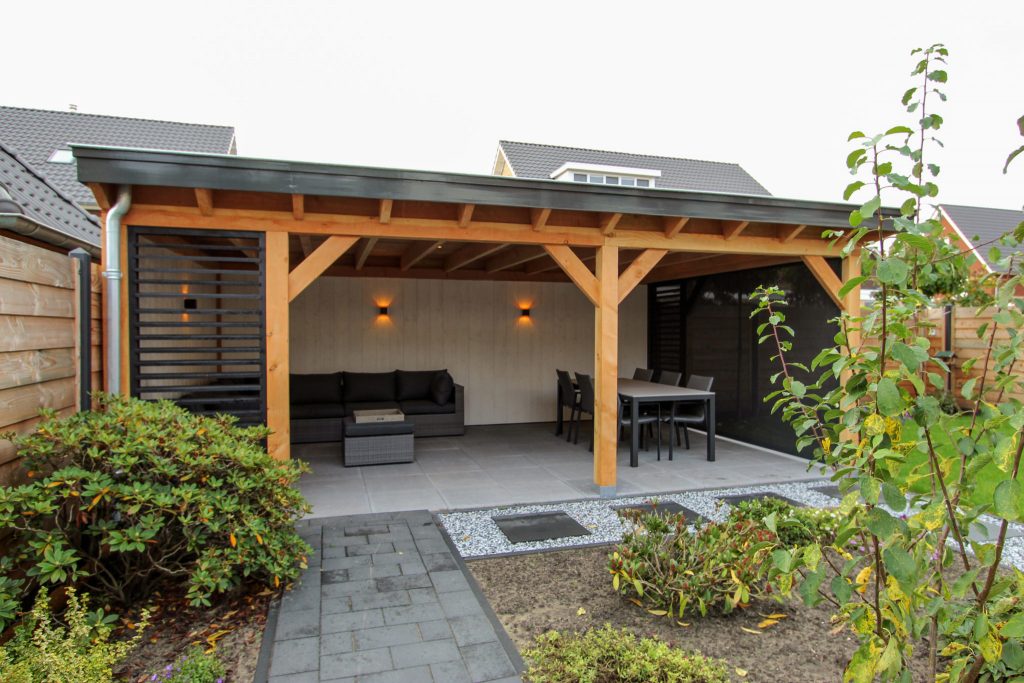
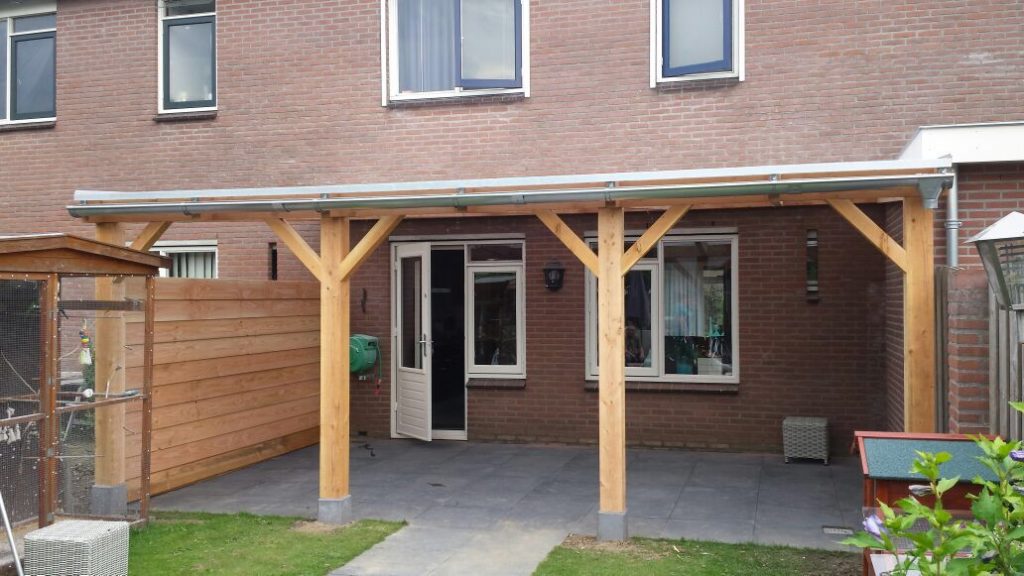
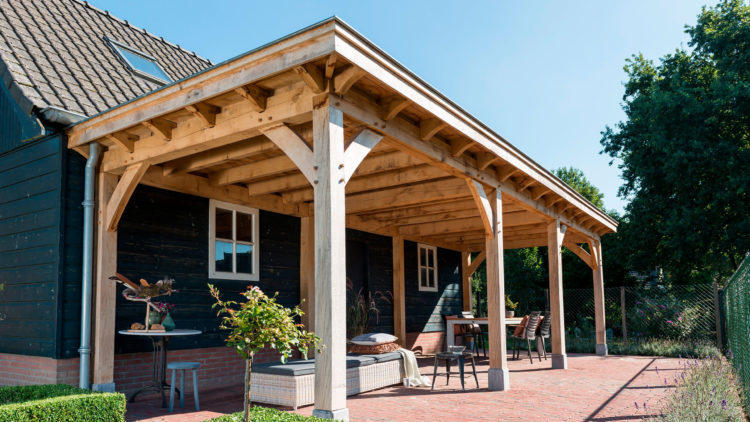
Looking for a cover for your patio? A wooden patio cover gives your garden a warm, natural look, and a well-built one lasts for years. You can also repaint or stain it, for example to match your house when you redecorate.
A cover lets you use the garden for more of the year: shade on bright summer days, and a dry spot to sit when it rains. On this page you'll find the main choices to make, what affects the price and how to look after it. You can also request up to 4 free, no-obligation quotes to compare suppliers.
A cover gives you a sheltered spot to spend time outside with friends and family, even outside the summer months. It keeps you cool on hot days, and with an outdoor heater you can use it on cooler evenings too. If you fit a heater or lighting, have the electrics installed by a qualified electrician.
Wooden garden covers come in several forms:
Arbours
Pavilions
Patio covers
Verandas
Carports
Douglas fir is a popular choice for wooden covers, as it weathers well and lasts a long time.
Why Choose a Wooden Cover?
Warm look: wood has a natural, warm appearance.
Easy to change: you can paint or stain it, so you can update the look over the years.
Renewable material: timber from responsibly managed forests is a renewable material. Ask for certified wood (for example FSC or PEFC).
Suits most homes: wood works with both rustic and modern houses.
Types of Wood for Patio Covers
Wooden patio covers are usually made from either pressure-treated softwood or hardwood. Wood for outdoor use has to cope with moisture, so only some species are suitable.
Pressure-treated wood is often a locally grown softwood that has been impregnated with a preservative against rot and fungi. It's the more affordable option, but expect to oil or stain it every few years.
Examples: pine or chestnut.
Hardwoods, often tropical species, are naturally resistant to moisture and fungi, so they don't need impregnating. They cost more but are much stronger and last longer than treated softwood. If you choose tropical hardwood, insist on certified, legally sourced timber.
Examples: mahogany, afrormosia or bangkirai.
Patio Cover Maintenance
All wood needs some maintenance, but how much depends on the type. Hardwood needs very little attention. Treated softwood should be oiled or stained every few years. Once a year, check for loose fixings, clear leaves and debris from the roof and gutters, and look for signs of rot where posts meet the ground.
Wooden Patio Cover Price
A pressure-treated wooden patio cover is the more affordable option, and hardwood costs considerably more. The final price also depends on the size, the roofing (polycarbonate, glass or tiles), foundations, any extras and fitting. Prices vary by region and supplier, so compare a few quotes. Also check whether you need planning permission, especially for larger or attached covers.
Most covers can be extended with options such as sliding glass panels or side walls, turning them into a garden room or outdoor living space. You can also paint the cover in a colour of your choice and furnish it to suit your taste.
Price and Quality
You want a veranda to last, so look at the quality of the wood. Slow-grown softwoods from cold climates, such as spruce, have fine growth rings and an even, strong structure. Good suppliers also dry the wood properly before use to reduce warping. Ask about this when you compare quotes.
For the best protection, treat the wood with a suitable, moisture-regulating preservative before assembly, or ask the supplier to do it. If you only treat it after assembly, the preservative won't reach some areas, such as the joints.
Attached Cover
Will an attached cover suit your home and garden? Think it through before you buy. An attached veranda makes the house feel larger and lets you step outside even when it's raining, but it also changes how much light reaches the room behind it. Make sure it's properly fixed to the wall and sealed against leaks, and check local building and planning rules first.