
Roof Insulation
Roof insulation is one of the most effective ways to keep heat in your home. Warm air rises, so an uninsulated roof or loft lets a large share of your heat escape. Insulating your flat or pitched roof keeps your home warmer and more comfortable and lowers your heating bill. You can insulate from the inside or the outside, depending on your roof and your plans.
Why Is Roof Insulation Worth It?
A well-insulated roof keeps the temperature in your home more even all year round: warmer in winter and less stuffy upstairs in summer. It also makes a loft or attic far more usable, for example as a bedroom or home office.
Roof insulation is often one of the most cost-effective energy-saving measures, and it keeps working for many years. It can also improve your home's energy rating, which buyers increasingly look at, and it cuts the emissions from heating your home.
Grants for Roof Insulation
Many countries and local authorities offer grants or other schemes for roof insulation. They often set requirements, such as a minimum insulation value or professional installation, and some require you to apply before the work starts. Check what's available where you live first.
Some roof insulation jobs, especially laying insulation on the loft floor or between rafters from the inside, are suitable for confident DIYers and can save a lot on labour. Wear gloves, long sleeves, eye protection and a dust mask, take care on loft joists, and never cover electrical cables or recessed lights without checking they're safe to insulate around. If you find old boards or insulation that might contain asbestos, stop and call a licensed specialist.
How Do You Insulate a Roof?
- Insulating a pitched roof
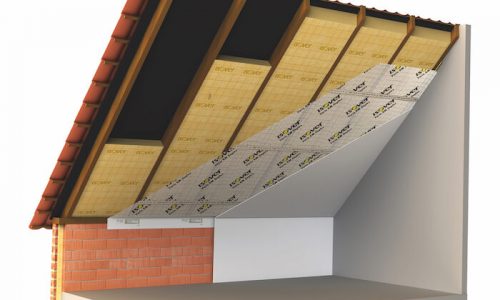
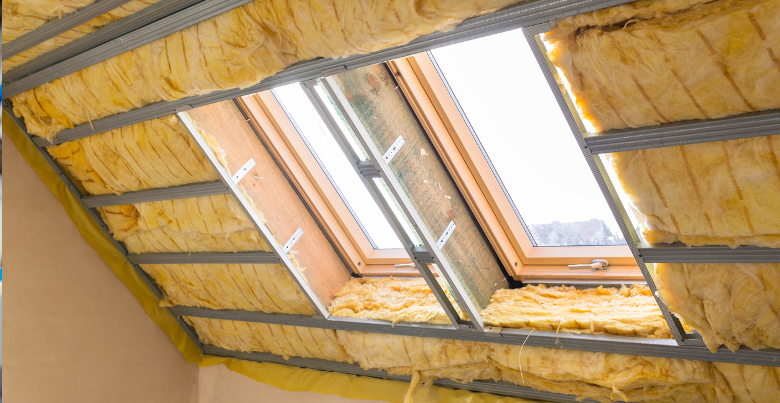
Insulating from the inside is usually the easiest option. You can use insulation rolls or batts between the rafters, rigid insulation boards, or a combination. It looks simple, but mistakes with vapour control and ventilation can lead to condensation, so get good advice. That matters even more if you want to qualify for a grant.
Insulating from the outside is a bigger job: the roof build-up gets thicker, so gutters and edges may need adjusting. It's usually done when the roof covering is being replaced anyway, and it's work for a roofing professional. - Insulating a flat roof
A flat roof can be insulated from the inside, between the joists, or from the outside on top of the deck. Inside insulation needs careful vapour control and is best avoided above damp rooms such as bathrooms. Outside insulation (a "warm roof") is generally the more reliable method, but it may mean raising the roof edges. Flat roof work at height should be done by a roofer. - Insulating the loft floor
Instead of the roof, you can insulate the loft floor. This makes sense if the loft stays unheated and is only used for storage. Lay insulation rolls between and across the joists. If you want to store things up there, use raised loft boarding so the insulation isn't squashed, and keep the eaves clear so the roof space stays ventilated.
What Does Roof Insulation Cost?
The cost depends on the method, the material, the thickness and the size of the roof. Insulating from the outside costs more than from the inside, and access (scaffolding, roof repairs) adds to the bill. Costs vary by region and job, so get several quotes. If you don't have the savings, check for grants or energy-saving loans.
What Does Roof Insulation Save?
Roof insulation can noticeably lower your energy bill. The savings are usually biggest when you insulate a pitched roof above a heated loft room. Insulating the loft floor of an unheated loft also gives worthwhile savings. The exact amount depends on your home, your energy prices and how you heat it, so ask installers for an estimate.
Is it better to insulate the roof or the loft floor?
If you use the loft as a living or working space, or plan to, insulate the roof. If it stays unheated and is only used for storage, insulating the loft floor is usually simpler and cheaper.
Can I insulate my roof myself?
Laying insulation on the loft floor or between rafters from the inside can be a DIY job. Insulating the outside of the roof, flat roofs and spray foam are best left to professionals.
How long does roof insulation last?
Good-quality insulation can last for decades as long as it stays dry. Check for leaks and damp before you insulate.
Do I need extra ventilation after insulating?
Often, yes. Insulation closes gaps that used to let air through, so make sure your home and roof space stay well ventilated to prevent condensation and mould.
What to Watch Out For
Older, poorly insulated homes often get ventilation through gaps and cracks. Insulating closes many of these and changes how moisture moves through the house, so check afterwards that ventilation is still good enough. A cheap hygrometer helps: indoor humidity of roughly 40 to 60% is comfortable for most homes.
Before insulating, check the roof and loft for problems such as leaks, wood rot or damp patches and fix them first. Insulation that gets wet stops working properly.
Request Free Quotes:
Get up to 4 free quotes from vetted local pros
Post your job for free. No obligation to hire.