
Floor Insulation: Materials, Costs and Tips
Floor insulation stops cold and damp from the crawl space or ground coming up into your home. You'll notice warmer floors, fewer draughts and lower heating bills. It works for both concrete and wooden floors. Insulation between storeys, such as an attic floor, also cuts footstep noise.
Check: What Is Under Your Floor?
The easiest and most effective method is to fix insulation to the underside of the floor from the crawl space. For that you need a crawl space with an access hatch and enough height to work in. Sprayed foam needs a bit more room again.
So first check whether you have a crawl space, how high it is and whether you can get in. Only then can you decide which approach suits your floor.
While you're looking, check for existing insulation, signs of damp or standing water, and pipes or cables that will need working around. Older insulation can often be improved.
Which Floor Insulation Suits Your Floor?
The right system depends on your floor construction, the insulation level (R-value) you're aiming for and how easy the space under the floor is to reach.
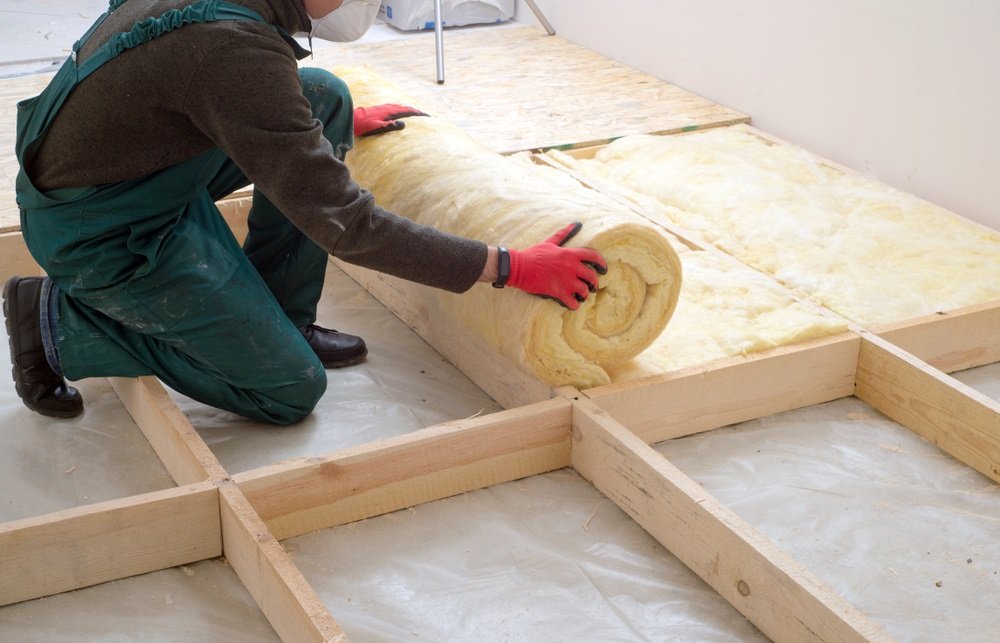
A crawl space you can move around in makes the job much easier. Under a concrete floor, EPS or PIR boards can be fixed straight to the underside. Under a wooden floor, mineral wool can be fitted between the joists from below.
Some materials suit some floors better than others. Glass wool in a damp crawl space is a bad idea, as it loses its insulating value when wet. Moisture-resistant options such as XPS, EPS or insulation chips are a better choice there.
If there's no usable crawl space, for example a floor laid on sand or a very shallow void, insulation beads can sometimes be blown in through holes in the floor or a hatch.
With a wooden floor you can also lift the boards and insulate between the joists from above. Or you can lay insulation on top of the existing floor, often PIR because it insulates well at a small thickness. Bear in mind this raises the floor level, so doors and skirting may need adjusting.
A damp crawl space doesn't have to rule out floor insulation. Insulation chips, beads, EPS and XPS cope well with moisture, sometimes combined with a membrane over the soil to reduce damp.
| Type of home | Relative cost |
|---|---|
| Mid-terrace house | Lowest |
| End-terrace house | Low |
| Semi-detached house | Medium |
| Detached house | Highest |
The cost depends mainly on the floor area, the type of floor, the material and how easy the crawl space is to reach. Costs vary by region and job. Check whether your national or local government offers grants for insulation.
There's no single best option for every floor. PIR boards insulate very well for their thickness, EPS is cheaper but needs a thicker layer, and mineral wool suits wooden floors. Ask installers which material they recommend for your floor and crawl space, and why.
With floor insulation, a layer of insulation is added to your ground floor, usually fixed to the underside from the crawl space.
Floor insulation is usually priced per m², sometimes with a call-out or starting fee. The price per square metre depends on the material (such as EPS, PIR, insulation beads or mineral wool), the thickness and how easy it is to reach the underside of the floor.
Floor Insulation for a Concrete Floor
An uninsulated concrete floor can feel noticeably colder than the room above it. Insulating it makes the room more comfortable and lowers your heating costs.
Concrete floors are usually insulated from the crawl space. EPS and PIR both work well. PIR insulates better per centimetre but costs more per m².
EPS (expanded polystyrene) is cheaper, but you need a thicker layer for the same result. The choice often depends on how much room you have under the floor.
Both are usually glued or fixed to the underside of the concrete. The tricky part is avoiding gaps between boards, which create cold bridges. You can't always spot these by eye, so a good installer seals the joints, and the edges against walls, with expanding foam.
A breathable material such as mineral wool (glass wool or rock wool) is a good choice for a wooden floor. Rock wool is denser, so it also helps with sound.
Rigid boards like PIR or EPS are less suited to wooden floors, as they can trap moisture against the timber and lead to rot or mould. In some cases they can be used with the right membrane, but get expert advice first.
Grants and Loans
Many countries and local authorities offer grants, tax relief or low-interest loans for insulation and other energy-saving measures. Sometimes you get a higher contribution if you combine several measures, for example:
- Insulating your floor as well as another part of your home, such as your roof, walls or windows.
- Combining an insulation measure with a heat pump, solar water heater or district heating connection.
Are you planning to take out a mortgage anyway? Some lenders allow you to borrow extra for energy-saving measures, and green loans are also available. Check whether your national or local government offers grants for insulation, and ask your bank about sustainability financing.
Environmental Impact of Insulation Material
Making insulation takes raw materials and energy, but over its long life insulation saves far more energy than it took to produce.
Many insulation materials can be reused or recycled at the end of their life. Insulation that is mechanically fixed or laid loose is easier to remove and recycle than glued or sprayed material such as spray foam.
Don't Forget: Ventilation!
Crawl space ventilation matters. Without it, moisture can build up, and in some areas radon gas can too. When you insulate, make sure the air bricks or vents stay clear, and discuss this with the installer.
Floor Insulation and House Dust Mites
Carpets and rugs on a cold, slightly damp floor are a good home for dust mites. Insulation makes the floor warmer and drier, which helps reduce them. If you have allergies or breathing problems, a smooth floor such as wood, vinyl, linoleum or laminate is easier to keep dust-free.
How Much Crawl Space Ventilation Do You Need?
The amount of ventilation needed depends on the floor type and local building regulations. Wooden floors generally need more ventilation than concrete floors to keep the timber dry, and vents should be spread over opposite outside walls for good airflow. If there's a gas pipe in the crawl space, ventilation is even more important. Check your local building regulations and ask your installer to confirm.
Start Requesting Quotes:
Get up to 4 free quotes from vetted local pros
Post your job for free. No obligation to hire.