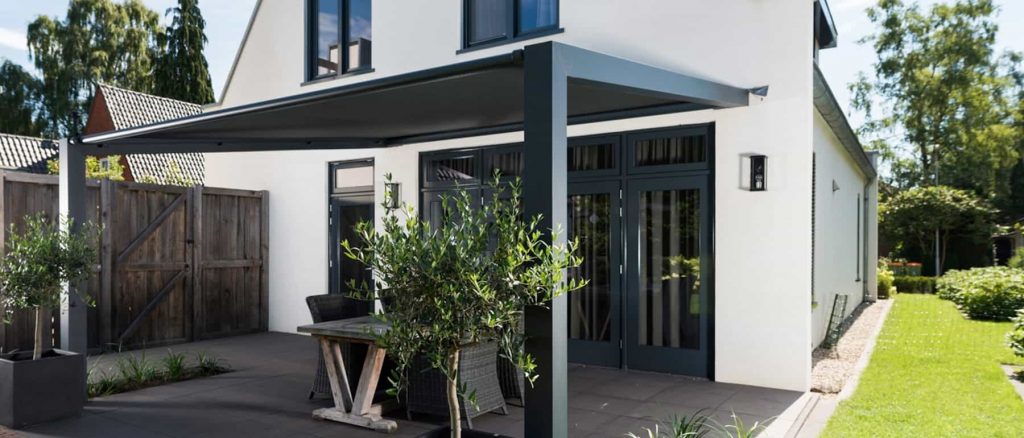
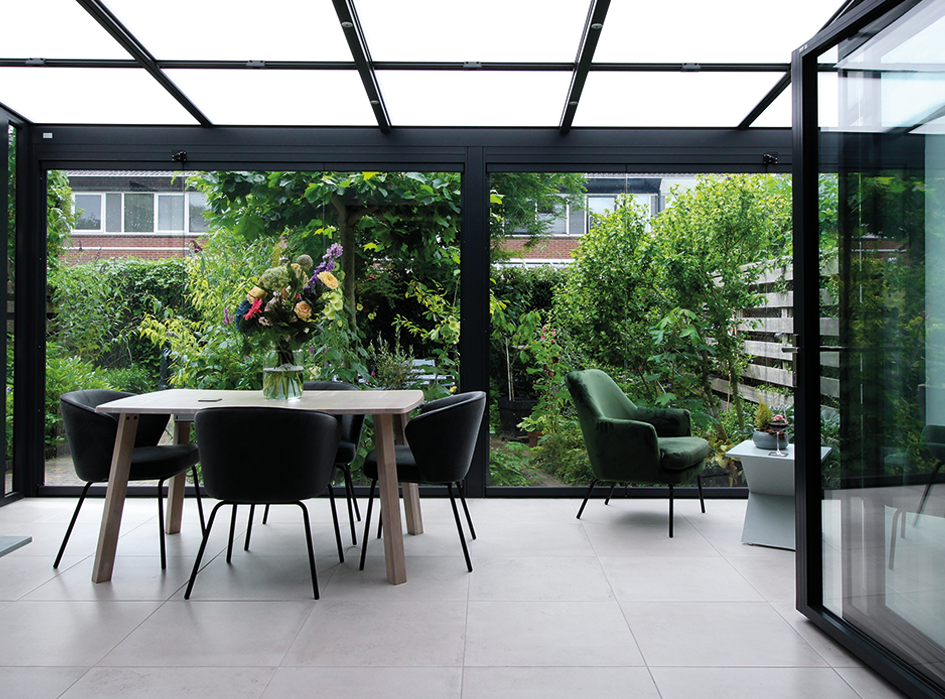
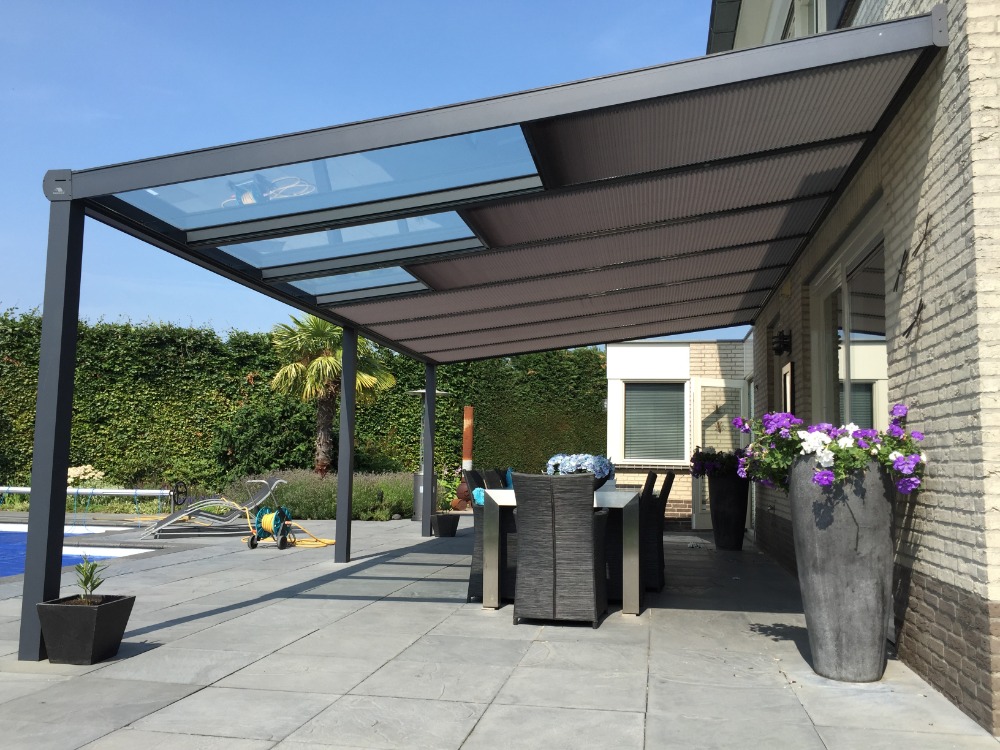
A fabric patio cover or patio awning is a practical way to shade a large patio. Fabric gives good protection from sun and light wind, so you can spend more time outside. On systems where the fabric is held taut in side rails, it also copes better with rain and gusts than a standard awning, which means you can use it in spring and autumn too. Here's what to know before you choose.
The price of a fabric patio cover depends on the frame material, how it's fixed (wall-mounted or freestanding), the size and the type of fabric.
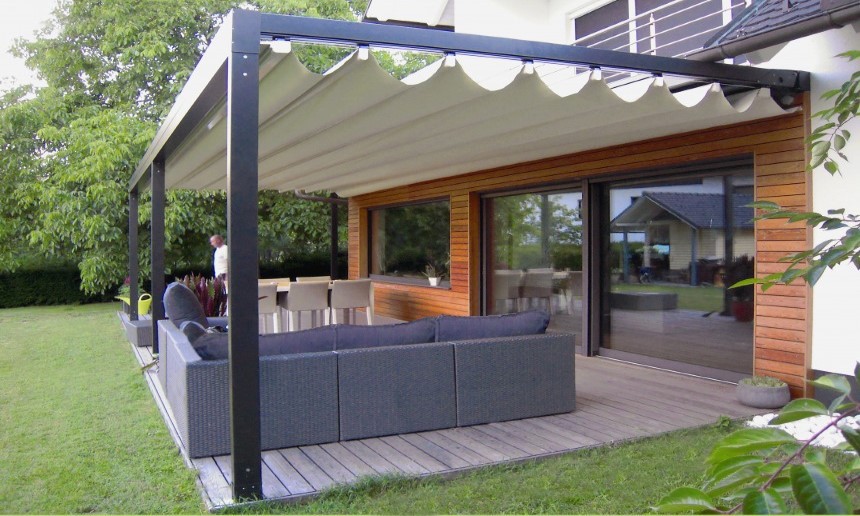
A simple shade sail, for example over a wooden frame, is the most affordable option. A retractable concertina fabric on a pergola costs more, and a motorised fabric roof on an aluminium frame sits at the top end. Fabric quality and extras such as motors, wind and rain sensors and lighting also add to the price. Costs vary by region and job.
Strength Outdoors, the fabric has to cope with wind and weather. A cheap fabric may tear or come loose in the first storm, so ask about the fabric's weight, the warranty and how it's tensioned.
Shape Choose a standard square or rectangle, or a special shape such as a triangle sail, depending on the look you want.
Retractable fabric Want flexibility? A retractable fabric lets you choose how much shade you get at any moment.
Sun Shading
There are several ways to shade a patio. A folding-arm awning fixes to the house wall and takes up very little space when retracted. Shade sails are also popular: they're made from sturdy canvas, can be placed flexibly and are easy to take down and store over winter. Always fix them to solid anchor points, as they put a lot of load on posts and walls in the wind.
Pergolas were originally built for climbing plants that grew over them and gave natural shade. Vines, wisteria and climbing roses all work well. It takes a few seasons to fill in, and you'll get leaves and fruit to clear up, but it's a lovely, low-cost option.
Types of Patio Cover Fabric
Patio cover fabrics come in a few versions. Choose the one that suits how you'll use the space.
Water-permeable fabric The cheapest option, with good UV protection. It can let water through in heavy, wind-driven rain.
Water-repellent fabric Has a protective finish that sheds most rain.
Waterproof fabric Coated (often with PVC) so rain runs straight off. It also gives strong UV protection. Make sure the cover has enough slope so water doesn't pool.
Benefits of a Fabric Patio Cover
Fabric roofs are popular for good reasons:
Waterproof: PVC-coated polyester fabrics keep out heavy rain.
Colours: fabric comes in far more colours than most other roofing materials, so you can add an accent to your garden.
Protection: it keeps off rain, leaves and strong sun.
Retractable: a roll-up system lets you cover the patio only when you need to, and the fabric rolls into a cassette when it's not in use. This adds to the cost.
Affordable: fabric is usually the least expensive roofing option. The trade-off is more maintenance and a shorter life than glass or polycarbonate. Clean it gently, let it dry before rolling it up and retract it in strong wind.
Is Fabric Strong Enough?
Is fabric strong enough for changeable weather? Good-quality fabric is, as long as it's properly tensioned and you retract it in strong wind.
Patio cover fabric is usually a composite of polyester (a strong synthetic fabric) with a PVC coating, which makes it tough and weatherproof. Ask the supplier what wind speed the system is rated for, and consider a wind sensor on motorised models.
Do You Need Planning Permission?
A fixed patio cover is often treated as an extension or outbuilding, so you may need planning permission or a building permit depending on where you live. Rules differ by country and local authority, but usually depend on things like:
The floor area of the cover.
The height of the roof.
The distance from the house.
The distance from the property boundary.
Whether the use of the space changes.
If in doubt, check with your local authority. A professional installer will usually know the local rules, but it's your responsibility to check.
A retractable awning usually isn't treated as an extension and often doesn't need a permit.
A fabric patio cover can be a sizeable purchase. You can keep the cost down with your choice of size and materials. Getting several quotes helps too: they're free and there's no obligation. Compare what each includes (frame, fabric, fitting, warranty) and check reviews. Use the button below to request up to 4 free quotes.