

Window coverings finish a room, but with so many options it's easy to get stuck. Below are practical window covering ideas, from curtains and blinds to shutters, plus what each type is good at, so you can pick what suits your rooms and the way you live.
They do two jobs. Practically, thick curtains help keep out the cold in winter and blackout fabrics darken bedrooms in summer. They also set the tone of a room, which is why it's worth taking your time over the choice.
Window Covering Ideas to Suit Your Style
Window coverings are usually one of the last things you choose when styling a room. Carry the room's colours through: a neutral room suits neutral fabric, while a bold colour draws the eye to the window. Length matters too. Curtains that just kiss or pool on the floor look relaxed and generous; sill-length curtains look tidier.
Short curtains stay out of the way when you vacuum and don't hang over the radiator, which wastes heat. If you want the window to stand out less, roller blinds are almost invisible when rolled up. For plenty of daylight, sheer curtains soften the light without blocking it.
A practical tip before you buy: measure every window separately, as frames in older homes are rarely identical. For curtains, fit the pole 10 to 15 cm above the frame and wider than the window, so the fabric can stack clear of the glass when open.
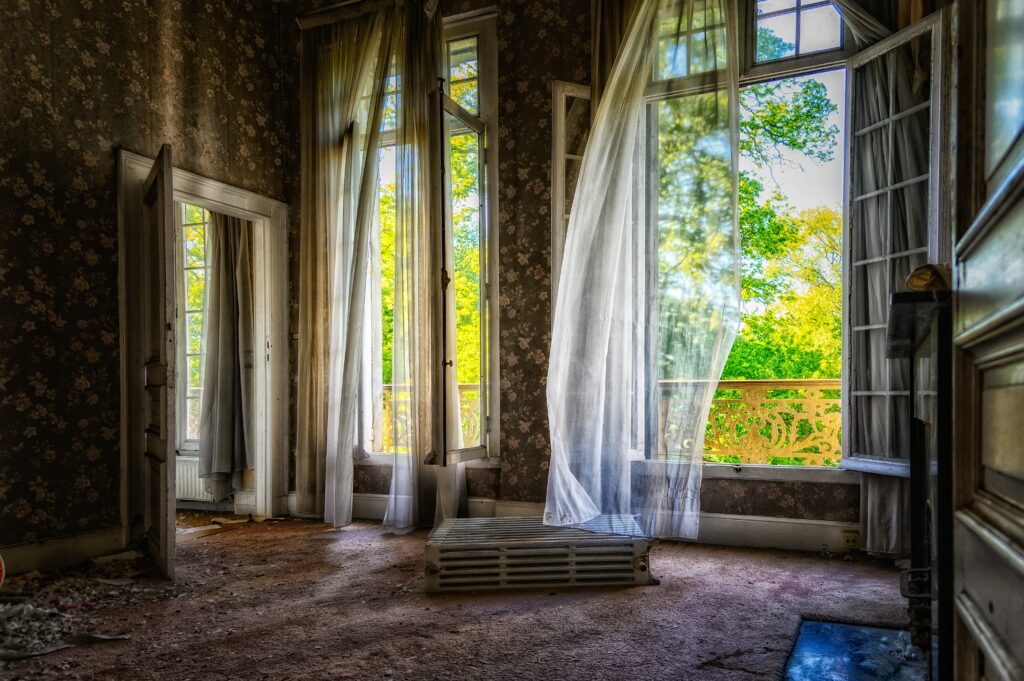
What Types of Window Coverings Are There?
Here's a rundown of the main types:
- Curtains
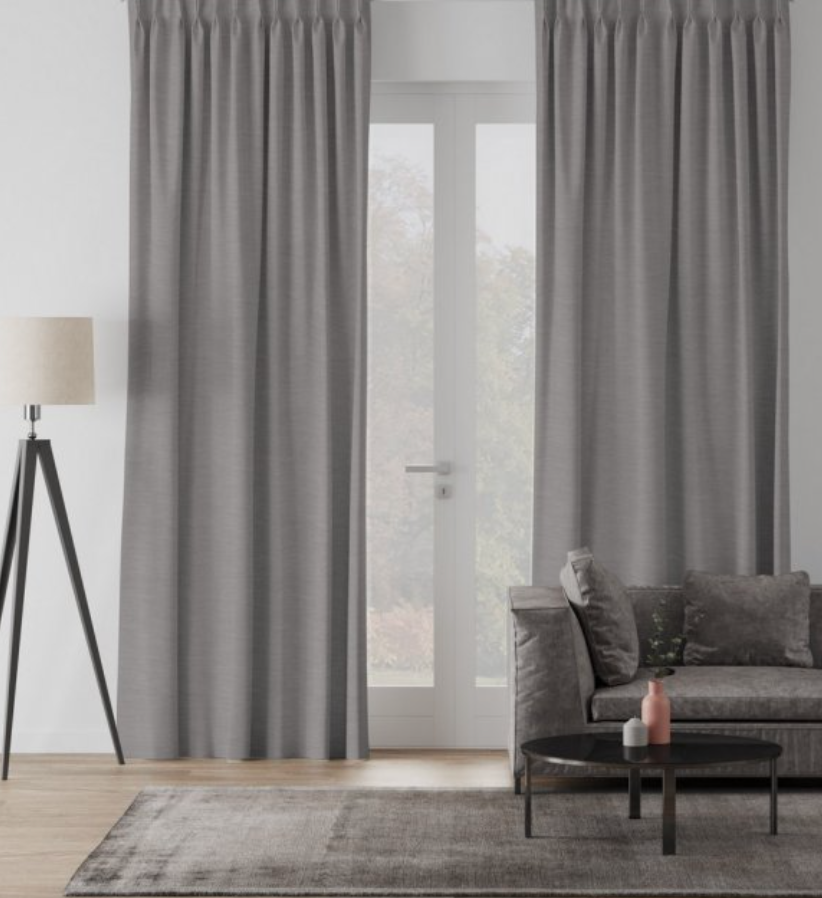
Curtains come in countless colours, patterns and fabrics and slide along a rail or pole. Heavy, lined curtains keep warmth in and block light and prying eyes; semi-sheer fabric gives privacy while letting light through. The heading style changes the look: a single pleat looks sleek, a double pleat looks fuller and more classic. If you have children, choose cordless or tension-fitted options for any blind cords. - Roller blinds
Roller blinds fit in or over the window frame and roll up or down with a cord or chain, so you control light and privacy. Day-and-night (zebra) blinds are a popular variant: two layers of horizontal bands slide over each other instead of the whole blind rolling up.
3. Roman blinds
Roman blinds lower and raise like a roller blind, but instead of rolling up they fold into soft horizontal pleats. They suit kitchens and bedrooms where you want fabric without the bulk of curtains.
4. Pleated blinds
Pleated blinds are a single layer of fabric that folds up like an accordion. They're light and easy to operate, and top-down/bottom-up versions let you cover just the lower half of a window for privacy while keeping daylight at the top.
5. Honeycomb (cellular) blinds
A honeycomb blind looks like a pleated blind but has two layers of fabric with air pockets between them. That makes it slightly heavier, but it blocks more light and insulates better, which is useful on large or draughty windows.
6. Venetian blinds
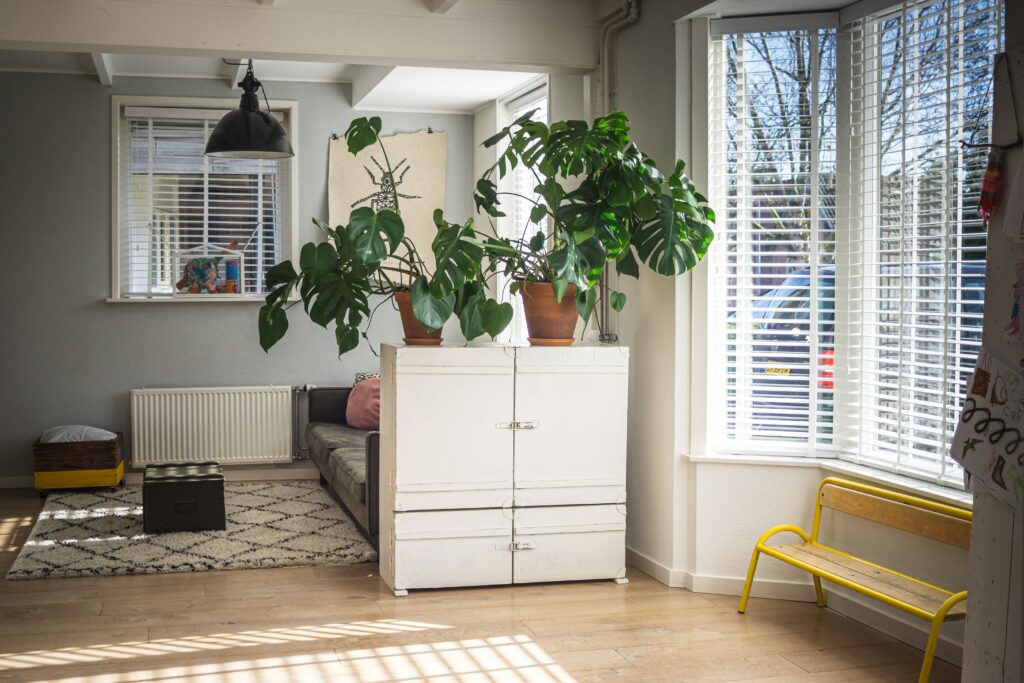
Venetian blinds have slats of wood, aluminium or PVC that tilt with a cord or wand, and you can raise them fully. They're easy to wipe clean and give fine control over light. In bathrooms and kitchens, aluminium or PVC slats cope better with moisture than real wood.
7. Shutters
Shutters are hinged frames with tilting slats, fitted in front of a window or door. They're made to measure, so they cost more than blinds, but they last a long time and suit both classic and modern rooms. Ask the supplier to measure up rather than doing it yourself.
8. Vertical blinds
Vertical blinds are fabric or plastic slats that hang vertically and draw to the side like curtains, either splitting in the middle or stacking to one side. They work well on wide windows and sliding doors.
Replacing the Windows Themselves?
If the frames are draughty, rotten or the glazing has misted up, new window coverings won't fix that. Modern uPVC frames are available in convincing wood-effect finishes. Request a few free uPVC window frame quotes through Fixmycrib to have your windows assessed and compare options.
Get up to 4 free quotes from vetted local pros
Post your job for free. No obligation to hire.