

A concrete floor in your house gives a clean, modern look that works in almost any room. It's hard-wearing, easy to clean and pairs well with underfloor heating. It also has a few drawbacks worth knowing about before you commit. Below we cover styling ideas, the pros and cons, what affects the cost and what to ask a flooring company.
The concrete floor trend
When old factories and warehouses were converted into homes and offices, the original concrete floors were often kept for their raw, industrial look. New homes picked up the style, and polished or poured concrete-look floors have been popular ever since. Concrete works very well with underfloor heating, because it holds and spreads heat evenly. On its own, concrete isn't a good insulator, so make sure there's proper insulation under the floor, especially on the ground floor.
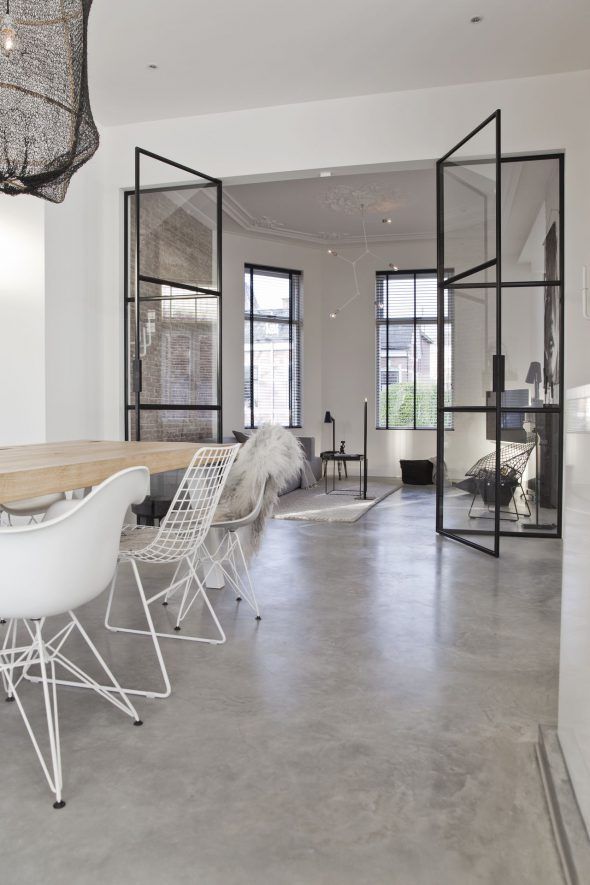
Concrete floors are often paired with an industrial interior: steel, exposed brick, black, white and grey, with copper accents. If you'd like a softer feel, use warm colours, rugs, curtains and plenty of textiles.
A concrete floor for every room
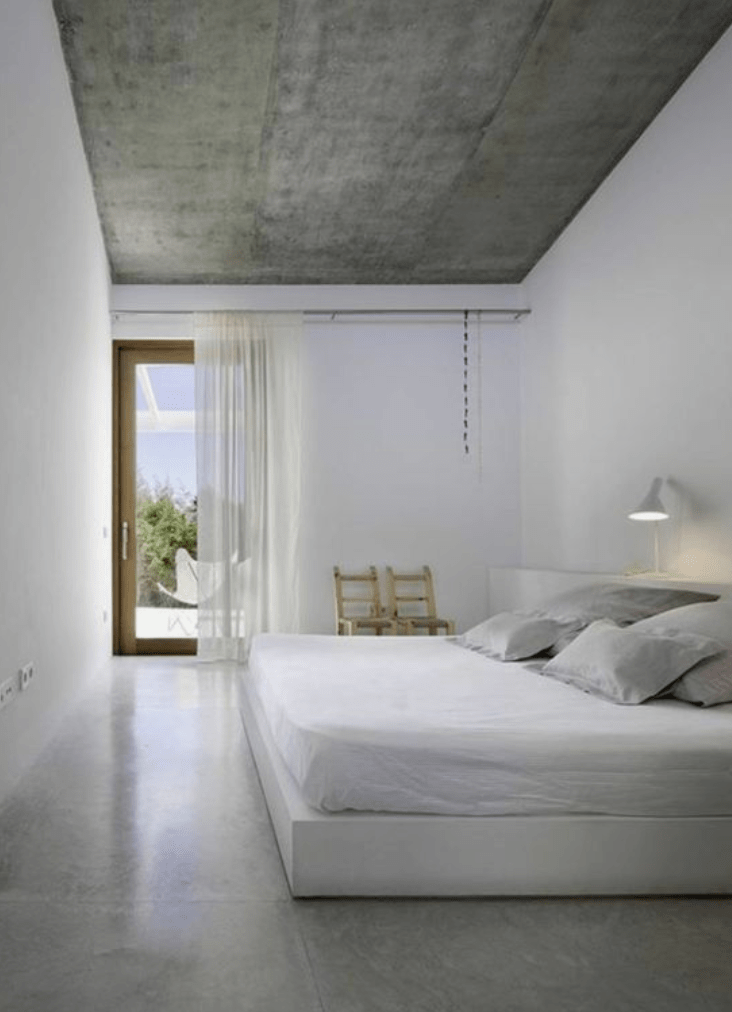
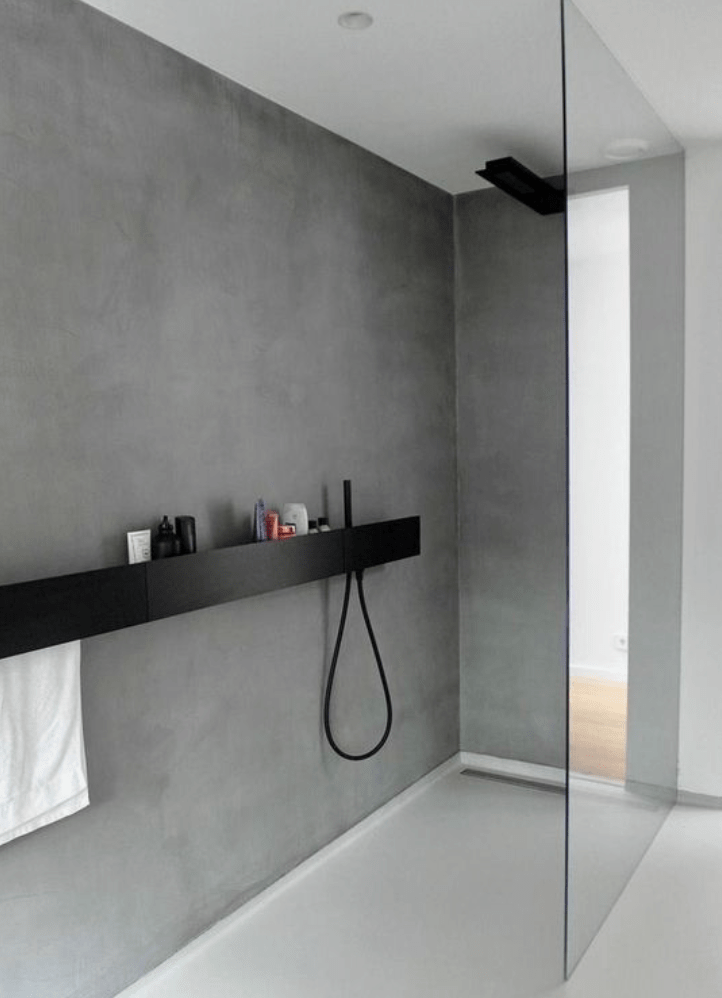
Concrete floors are common in living rooms and across the ground floor, but they also work in kitchens, bathrooms and bedrooms. In wet areas, ask about a slip-resistant finish and a good sealer. Bear in mind that hard floors reflect sound, so rugs and soft furnishings help keep rooms from sounding echoey.
Painting a concrete floor
Concrete floors are usually left in their natural grey, but they can be painted or coated in almost any colour. Use a floor paint or coating designed for concrete, and make sure the floor is clean, dry and free of grease first. A new floor needs to cure fully before it can be painted, so check with the installer.
Concrete stairs
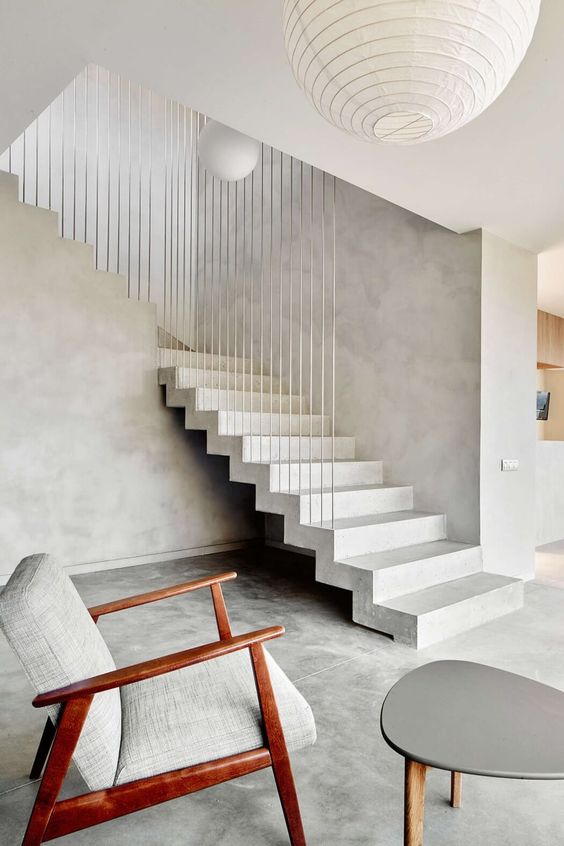
Concrete stairs are popular too. They match a concrete floor well, but also stand out on their own. Ask about an anti-slip finish on the treads.
The cost of a concrete floor
The price depends on the floor area, the condition of the existing subfloor, the type of floor (poured, polished or a concrete-look coating), the thickness, the finish and sealing, and whether underfloor heating goes in at the same time. Costs vary by region and job. Request quotes from several companies and compare what's included, such as preparing the subfloor, moving furniture and aftercare.
Advantages of a concrete floor
Concrete floors have some real practical advantages:
Few joints, easy to clean
A concrete floor has very few joints, so there's little room for dirt to collect. Sweep and mop with a mild, pH-neutral cleaner and it stays looking good.
Good value for large areas
For large open areas, such as a whole ground floor, concrete can be a cost-effective choice, and it can be laid in one go without lots of joins.
A unique look
Because of the way concrete is poured and finished, no two floors look exactly the same. Small colour variations are part of the character.
Disadvantages of a concrete floor
Concrete floors have some drawbacks too, but most can be managed with good installation and care.
Hard underfoot
Concrete is hard and can feel cold without underfloor heating. Anything you drop is more likely to break.
Losing its sheen
After a few years the surface can look dull, especially in busy areas. Regular maintenance with a suitable care product, and resealing when needed, keeps it looking fresh.
Cracks
Concrete moves with changes in temperature and moisture. Expansion joints in the right places reduce the risk of cracks, and fine hairline cracks are normal. Ask the installer how they prevent cracking and what the guarantee covers.
With the right preparation and care, a concrete floor can last for many years and look good in almost any room.
Get up to 4 free quotes from vetted local pros
Post your job for free. No obligation to hire.